
Mold Remediation
Found mold at home? Take a breath, and let us connect you with a local provider who can clean it up.
Found mold or smell something musty? Take a breath. Stickchemistry Mold Help connects you with independent local providers who inspect, test and clean up mold, and we explain each step.
Stickchemistry Mold Help refers you to independent providers. They perform the work and set their own prices, so you always know who you are dealing with.
You get plain guidance for the first hour, then a clear path to inspection, testing or cleanup at your own pace.
The providers in our network serve Tampa and the Tampa area, so they know humid homes, storm season and common building types.
Ask for scope and total price in writing. You can compare and decide with no obligation.
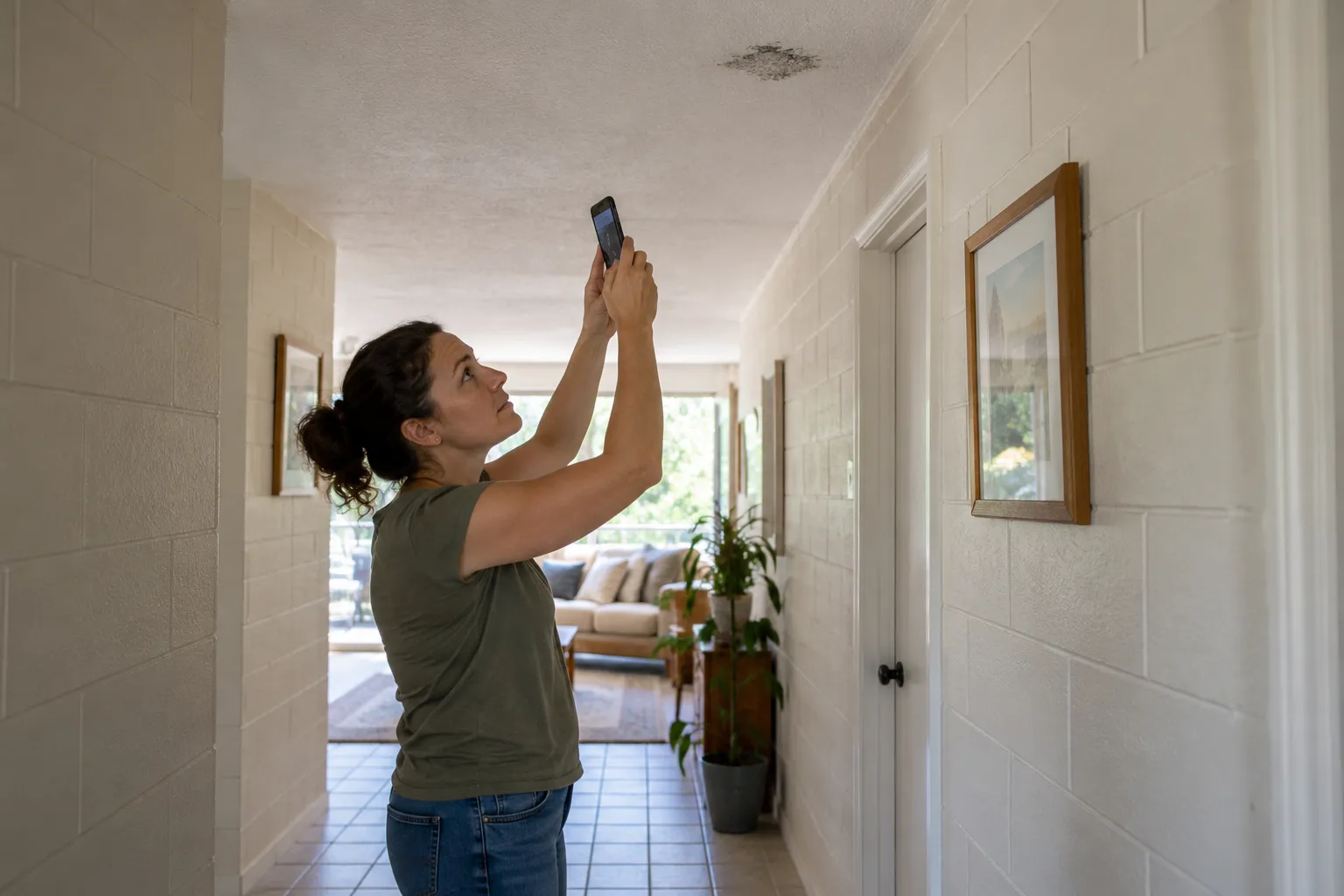
Stop the water if you can, leave the mold alone, close the door, and take photos.
Request a callback or send a request, and we will route it to a local provider.
Ask the provider for a scope of work and quote you can read slowly.
Providers clean up and address moisture, then you check the result together.
Most mold calls fall into three groups. Some homeowners need cleanup. Some just need to know what is growing and where. Some are worried about dark, black-looking mold. Pick the one that fits, or ask a provider to help you sort it out.
Found mold at home? Take a breath, and let us connect you with a local provider who can clean it up.
Not sure if that spot is mold? A local provider can look, test, and explain what you have.
Found dark mold at home? Take a breath, and let us point you to a local provider.
Found mold or a musty smell? Send a short note about what you see, and a local provider can follow up with next steps and a written quote.
No obligationA musty smell. A dark patch on the ceiling. A spot behind the toilet that just looks wrong. If you are reading this, something at home has you worried. That is okay. Take a breath.
Stickchemistry Mold Help is a referral service. We connect homeowners in Tampa and the Tampa area with independent local providers who inspect, test and clean up mold. The providers do the work. We help you reach them.
Here is a calm first hour. Stop the water if you can see where it comes from. Turn off the fan or air handler near the spot so spores do not travel. Keep kids and pets away. Do not scrub it or spray it. Take a few clear photos. Then make a plan.
You do not have to figure out the rest alone. Request a callback to check provider availability in your area.
Would you rather write it down first? Describe what you see and ask for a written quote. There is no obligation.
Stickchemistry Mold Help is a referral service. That is the whole job. You tell us about your mold problem, and we point you to independent providers that serve the Tampa area. We do not inspect, test or remove mold ourselves.
The providers in our network are separate local businesses. Each one runs its own crews, sets its own prices and holds its own licenses. Please ask about licensing and insurance before you hire anyone. If you want certified mold testing, ask the provider to show you the credentials in writing.
You call or send the form. Your details go to a provider that serves your part of the area. That provider reaches out to you to talk about what you found and set a visit. Call hours vary by provider, so ask when someone can come out.
Providers set their own prices, and every home is different. As a rough U.S. guide, an inspection with testing often runs a few hundred dollars. Cleanup can run from several hundred dollars for a small spot to several thousand for a larger area. Always get a written quote that lists the scope, the steps and the total.
Plain answers. No pressure. You can compare what a provider offers and say no. There is no obligation to hire anyone you talk to.
Stickchemistry Mold Help focuses on Tampa, FL and the Tampa area. Providers in our network work in neighborhoods with older subdivisions, newer builds, condos and townhomes. Which provider reaches out depends on where your home is and what you need.
Living here means warm, wet air for much of the year. Summer storms roll in often. Hurricane season brings extra moisture risk from June to November. Mold loves those conditions, so it is a common worry for local homeowners, and a worry is not a failure on your part.
If you are not sure your address is covered, just ask. Request a callback to check provider availability near you.
You can also send a short description of the problem and your street area. A provider can reply with questions and a written quote.
Warm air holds a lot of water. When that air touches a cooler wall, vent or window, moisture can settle. Add months of humidity and a few damp days, and mold can start to grow on surfaces you rarely look at.
Many homes here are concrete block on a slab. Block can hold moisture, and a slab leaves few places to hide a leak. Look at the bottom of walls, closets on outside walls and behind furniture pushed against block.
In a condo, a leak can start in another unit or inside a wall you cannot reach. Tell your association or property manager early. A provider can help you document what you see.
Tile and shingle roofs can both let water in after heavy rain. Check ceilings for stains, soft spots or a faint smell. Take photos with the date. Mold can begin to grow within a couple of days of a wet event.
From June to November, keep gutters clear and look over the roof after big storms. If power is out for days, air conditioning stops and indoor air gets damp fast. Dry what you can once it is safe.
Aim for roughly 30 to 50 percent humidity indoors. A small meter costs little. Run bathroom fans, use the air conditioner, and fix drips under sinks. Do not let wet towels or clothes sit in a pile.
Stop the water source if you can. Turn off the fan or air handler near the spot. Keep people and pets away. Take photos. Do not scrub or bleach it. Write down when you first noticed it.
Some policies may cover sudden damage, but many do not cover long, slow leaks. Check your policy. Providers can often help document damage for a claim. Keep your photos, notes and any written quotes together.
If the area is bigger than about ten square feet, keeps coming back, or you smell mold but cannot see it, ask a provider for an inspection. Anyone with asthma or allergies in the home is a good reason to ask sooner.
You do not need the perfect words. Tell us what you saw, where it is and when you noticed it. That is enough for a provider to start the conversation.
Request a callback to check provider availability, or ask for an estimate in writing.
If you prefer email, write to contact@stickchemistry.garden.
Describe what you see through Stickchemistry Mold Help and a provider that serves your area can follow up. Ask about their testing credentials, what the visit includes, and for a written quote before you agree to anything.
Dark mold can look scary, but color alone does not tell you the type or the risk. Keep people with asthma or allergies away from it, avoid disturbing it, and ask a provider about testing and safe removal.
Typical U.S. prices vary a lot by job. A small area may cost several hundred dollars. Larger or hidden mold can reach several thousand. Inspection and testing are often priced separately. Always get a written quote.
Bleach on porous surfaces like drywall or wood often does not reach the roots, and scrubbing can spread spores. For a tiny spot on hard surfaces, follow safety guidance. For anything larger, ask a provider.
It depends on your policy and the cause. Some policies may cover sudden damage, such as a burst pipe, but not slow leaks or ongoing humidity. Check your policy, and providers can often help document damage for a claim.
Found mold or a musty smell? Send a short note about what you see, and a local provider can follow up with next steps and a written quote.
No obligation